Best Aesthetic Training Center Philippines: 2026 Guide
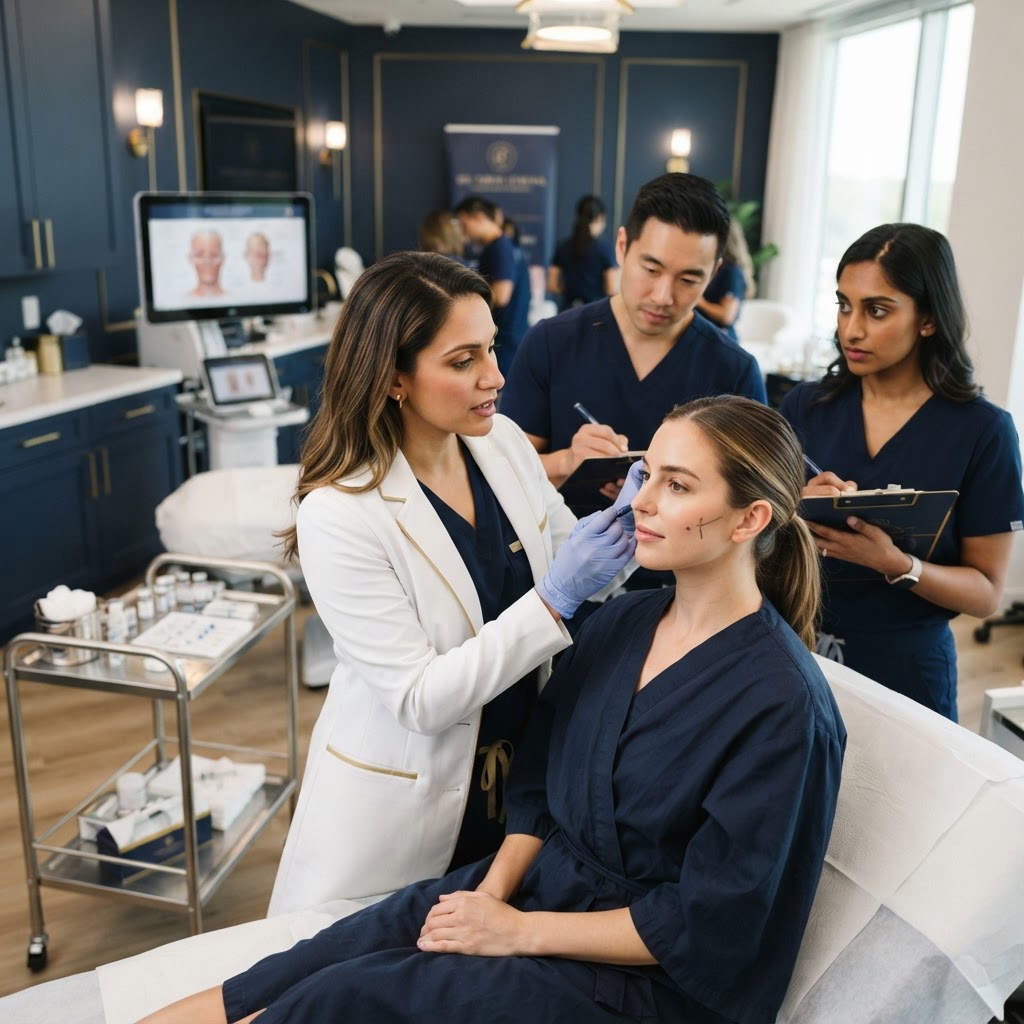
Discover what sets the best aesthetic training center Philippines apart: physician-led hands-on clinical practice versus online or mannequin courses.
To choose the best aesthetic training center Philippines clinicians must look beyond theoretical slide decks and focus on intensive, physician-supervised hands-on training using live clinical models. While didactic webinars deliver baseline concepts, safe aesthetic practice requires high-fidelity tactile feedback, dynamic vascular assessment, and direct physician mentorship to prevent devastating complications such as vascular occlusion and soft-tissue necrosis.
For licensed doctors and medical practitioners entering clinical aesthetics, selecting a reputable training academy dictates clinical safety, complication management readiness, and long-term business viability. Whether you are transitioning from general medicine or expanding a clinical dermatology practice, identifying medical aesthetics courses in Manila that satisfy regulatory rigor is the first step toward clinical excellence.
Hands-On Clinical Mentorship vs. Online & Mannequin Modules
The aesthetic training sector has expanded rapidly, resulting in three distinct educational formats: pre-recorded online certificates, silicone mannequin workshops, and supervised live-patient clinical training.
The Failure Points of Mannequin and Online Modules
Online courses are effective for memorizing facial anatomy, neurotoxin dilution ratios, and basic skin histology. However, online modules cannot teach needle depth resistance, dermal plane transitions, or sudden patient micro-movements.
Similarly, silicone mannequin heads fail to reproduce real human physiology:
- Zero dynamic tissue response: Silicone does not display immediate capillary refill times, tissue blanching, or swelling.
- No vascular variation: Mannequins lack genuine anatomical tortuosity, vascular anomalies, and tissue planes, instilling a false sense of procedural security.
- No real-time patient communication: Aesthetic injecting requires continuous dynamic facial evaluation during expression, talking, and swallowing.
Why Physician-Led Live-Patient Training Is Non-Negotiable
In contrast, physician-led clinical instruction pairs delegates with experienced medical faculty who guide real needles and cannulas into human tissue. Under direct supervision, you learn to palpate the facial artery, navigate the superficial musculoaponeurotic system (SMAS), assess high-risk danger zones, and immediately evaluate tissue perfusions.
According to the American Academy of Dermatology, injectable procedures carry acute vascular risks that necessitate immediate bedside recognition and emergency intervention protocols, including high-dose pulsed hyaluronidase administration. Mannequin courses simply cannot simulate the clinical gravity or rapid response needed during vascular compromise.
What to Look for in a Philippine Aesthetic Training Institute
When vetting an academy in Metro Manila or across Luzon, apply this clinical and institutional checklist:
1. Physician Leadership and Credentialed Faculty
Verify the credentials of the training director. Your mentors should hold active Philippine medical licenses and leadership status in reputable societies, such as the Philippine Academy of Aesthetic and Age-Management Medicine (PDS/PPAI circles). Instruction led by board-certified practitioners ensures that lessons prioritize aseptic protocols, bio-safety, and ethical patient selection over commercial salesmanship.
2. High Live-Model-to-Delegate Ratios
Ask the admissions team directly: How many live models will I inject independently under supervision? Reputable institutes keep cohort sizes strictly capped (typically 4 to 8 delegates per mentor) to ensure one-on-one oversight. If an academy places 20 doctors around a single model for a "watch-and-learn" afternoon, you are not acquiring muscle memory.
3. Philippine FDA (FDA-PH) Regulatory Compliance
Ensure the training center uses only authentic, registered medical devices and injectables approved by the Food and Drug Administration Philippines. Training with unregistered imported toxins or unverified hyaluronic acid cross-links exposes practitioners to ethical vulnerabilities and legal penalties under Republic Act No. 9711. Furthermore, clinical protocols must respect Professional Regulation Commission scope-of-practice mandates for licensed medical professionals.
4. Comprehensive Complication Management Protocols
An aesthetic course is only as good as its safety curriculum. The academy must teach you:
- Emergency algorithms for impending ischemic necrosis.
- Retrobulbar rescue pathways and emergent ophthalmology transfer protocols.
- Managing delayed-onset granulomas, biofilm formation, and Tyndall effects.
- Proper documentation, medical consent execution, and photo-documentation standardization.
Action Checklist: How to Evaluate Your Aesthetic Course
Before paying tuition fees (which typically range from ₱60,000 to over ₱250,000 depending on module depth and bundled clinical supplies), review this five-point scorecard:
- [ ] Faculty Transparency: Is the training director an experienced medical doctor with published credentials?
- [ ] Hands-On Guarantee: Does the syllabus allocate at least 60% of total course hours to live model procedures?
- [ ] Device & Consumable Authenticity: Are all injectables, chemical peels, and energy-based devices FDA-PH cleared?
- [ ] Curriculum Breadth: Does the course integrate facial anatomy, neuromodulators, advanced dermal fillers, medical facials, and bio-stimulators?
- [ ] Post-Training Support: Does the academy provide continuous mentorship groups, complication consult hotlines, and clinic business guidance?
Practitioners seeking a structured, complete immersion can explore our 4-Day Integrated Aesthetics Masterclass, designed to transition medical professionals into confident, safety-focused aesthetic clinicians. You can also benchmark course dates against our upcoming training batches to plan your continuing medical education.
Elevate Your Practice at Academy of Advanced Aesthetics
Selecting the right training partner defines the trajectory of your clinical practice. As the best aesthetic training center Philippines clinicians rely on for procedural safety, the Academy of Advanced Aesthetics (AAA) delivers physician-led, hands-on clinical mastery. Under the leadership of Training Director Dr. Rachel V. Pingol-Maderazo, MD, FPPAI, FPFCS, our small-group programs ensure personalized coaching on live models in our state-of-the-art facility at 118 Matahimik St., Diliman, Quezon City.
Bridge theory and practice with confidence. Contact the Academy today to consult our academic coordinators, reserve your seat, and launch your aesthetic career backed by rigorous medical standards.
Referenced in this article
- 1
- 2
- 3PRC Board of Medicine Guidelines
prc.gov.ph